

- seo
- No Comments
- January 22, 2026
The Importance of Coordination Between HVAC, Electrical, and Plumbing in Modern Construction
Modern buildings rely on systems more than ever before. HVAC, electrical, and plumbing systems control comfort, safety, energy use, and daily operation. When these systems are not coordinated properly, problems appear quickly during construction and long after handover.
This is why coordination between HVAC, electrical, and plumbing is no longer optional. It is a core responsibility of any professional construction company. A reliable contracting company must ensure that these systems work together smoothly, not against each other. As an experienced general contracting company, Skilya places system coordination at the center of its construction approach across Saudi Arabia.
Why MEP Coordination Matters More Today
Buildings today are more complex. Ceiling spaces are crowded. Energy standards are higher. Systems are more sensitive to errors.
Poor coordination leads to:
- Clashes between ducts, pipes, and cable trays
- Limited access for maintenance
- Delays caused by rework
- Reduced system performance
- Higher operating costs
A professional construction company understands that coordination is not just about fitting systems into space. It is about making buildings work properly.
HVAC, Electrical, and Plumbing Share the Same Space
One of the biggest coordination challenges is space.
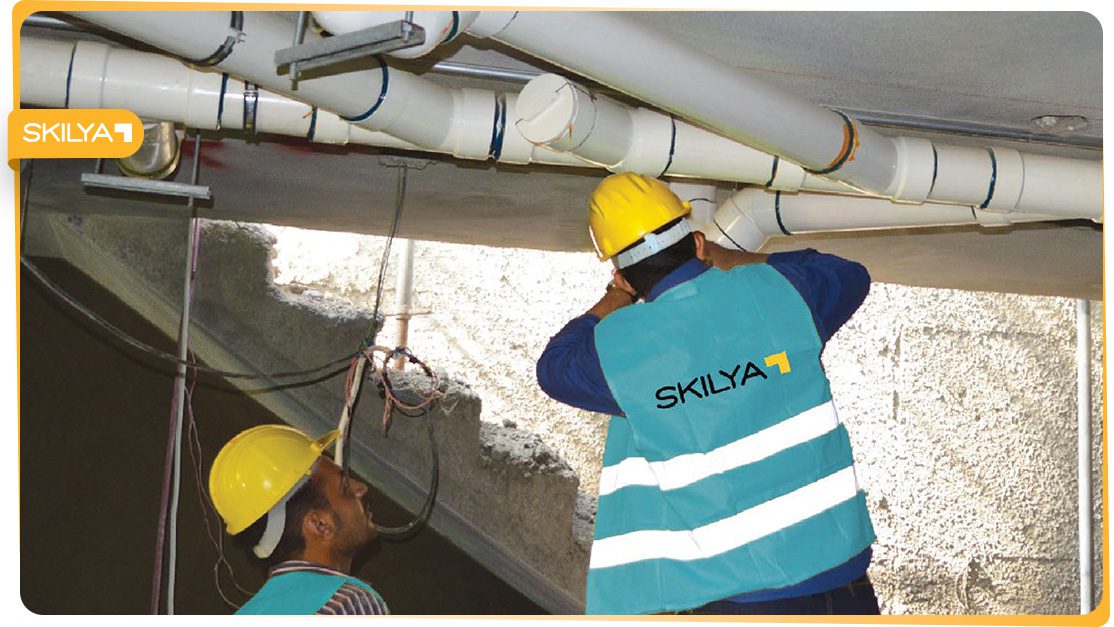
HVAC ducts, electrical containment, and plumbing pipes often run through the same ceilings, walls, and service shafts. If each system is designed or installed independently, conflicts are almost guaranteed.
A professional general contracting company plans these systems together. Clear routes, priorities, and clearances are defined early. This prevents congestion and improves overall layout quality.
The Difference Between Basic Installation and Real Coordination
Many projects focus only on installing systems. Each trade completes its work, but no one checks how systems interact.
Real coordination means:
- Reviewing systems together during design
- Planning installation sequences
- Checking access for maintenance
- Testing systems as one network
A professional contracting company is responsible for making this happen. Without centralized control, coordination breaks down.
Early Design Review Prevents On-Site Problems
Most coordination issues can be avoided before construction starts.
A professional construction company reviews HVAC, electrical, and plumbing designs together. Routes, sizes, and access requirements are checked early.
Skilya applies this approach to identify clashes and conflicts before work reaches the site. Solving problems early saves time, cost, and frustration during execution.
Installation Sequence Is Just as Important as Design
Even with good design, poor sequencing can cause problems.
For example:
- Electrical trays installed before HVAC may block duct routes
- Plumbing installed too early may be damaged by later works
- Finishing started before system testing creates rework
As a professional general contracting company, Skilya controls installation sequence carefully. Each trade works at the right time, in the right order.
On-Site Coordination Keeps Work Flowing
Coordination does not end with drawings. It must continue on-site.
A professional construction company ensures daily coordination between trades. Progress is reviewed. Issues are resolved immediately.
Skilya maintains active on-site coordination through engineers and supervisors who monitor HVAC, electrical, and plumbing works together. This reduces downtime and keeps execution smooth.
How Skilya Ensures Strong MEP Coordination
Skilya treats HVAC, electrical, and plumbing coordination as a shared responsibility, not a trade-by-trade task. As a professional general contracting company, Skilya manages all MEP disciplines under one coordinated plan.
Design reviews, execution planning, and supervision are aligned. Engineers from different disciplines work together instead of in isolation. Changes are reviewed centrally to understand their impact on all systems.
As a trusted construction company, Skilya focuses on clarity, efficiency, and long-term performance. This integrated approach reduces errors and improves system reliability.
Maintenance Access Is Part of Coordination
Good coordination is not only about fitting systems during construction. It is also about future access.
Poorly coordinated systems often block access to:
- Valves
- Panels
- Filters
- Control units
A professional contracting company plans access points early. Skilya ensures that systems are arranged to allow safe and easy maintenance, reducing long-term operating issues.
Testing Systems Together, Not Separately
Testing HVAC, electrical, and plumbing systems separately is not enough.
Systems affect each other:
- Electrical power affects HVAC performance
- Plumbing affects drainage and safety systems
- Controls connect multiple systems
A professional construction company plans integrated testing. Skilya tests systems as one coordinated network. This reduces failures after handover and improves operational readiness.
Cost and Time Benefits of Proper Coordination
Good coordination saves money and time.
Benefits include:
- Less rework
- Faster installation
- Cleaner finishes
- Fewer delays
A professional general contracting company understands that coordination is an investment that pays back throughout the project.
Skilya’s coordination approach helps clients avoid common mistakes and achieve better project outcomes.
Common Coordination Mistakes and How to Avoid Them
Common mistakes include:
- Late coordination
- No clear priorities between systems
- Poor communication between trades
- Rushed testing
Skilya avoids these mistakes through early planning, clear sequencing, and continuous supervision.
Why Coordination Is a Core Contracting Responsibility
MEP coordination cannot be left to individual trades.
A general contracting company must take ownership of coordination. It must plan, manage, and enforce alignment between systems.
Skilya’s role as a general contracting company allows it to manage this responsibility effectively, without confusion or delays.
Frequently Asked Questions
Why is MEP coordination important in modern construction?
Because systems share space and must work together.
Who should manage HVAC, electrical, and plumbing coordination?
The general contracting company.
What happens if coordination is ignored?
Delays, rework, and long-term operational problems.